Electric Fields Explained
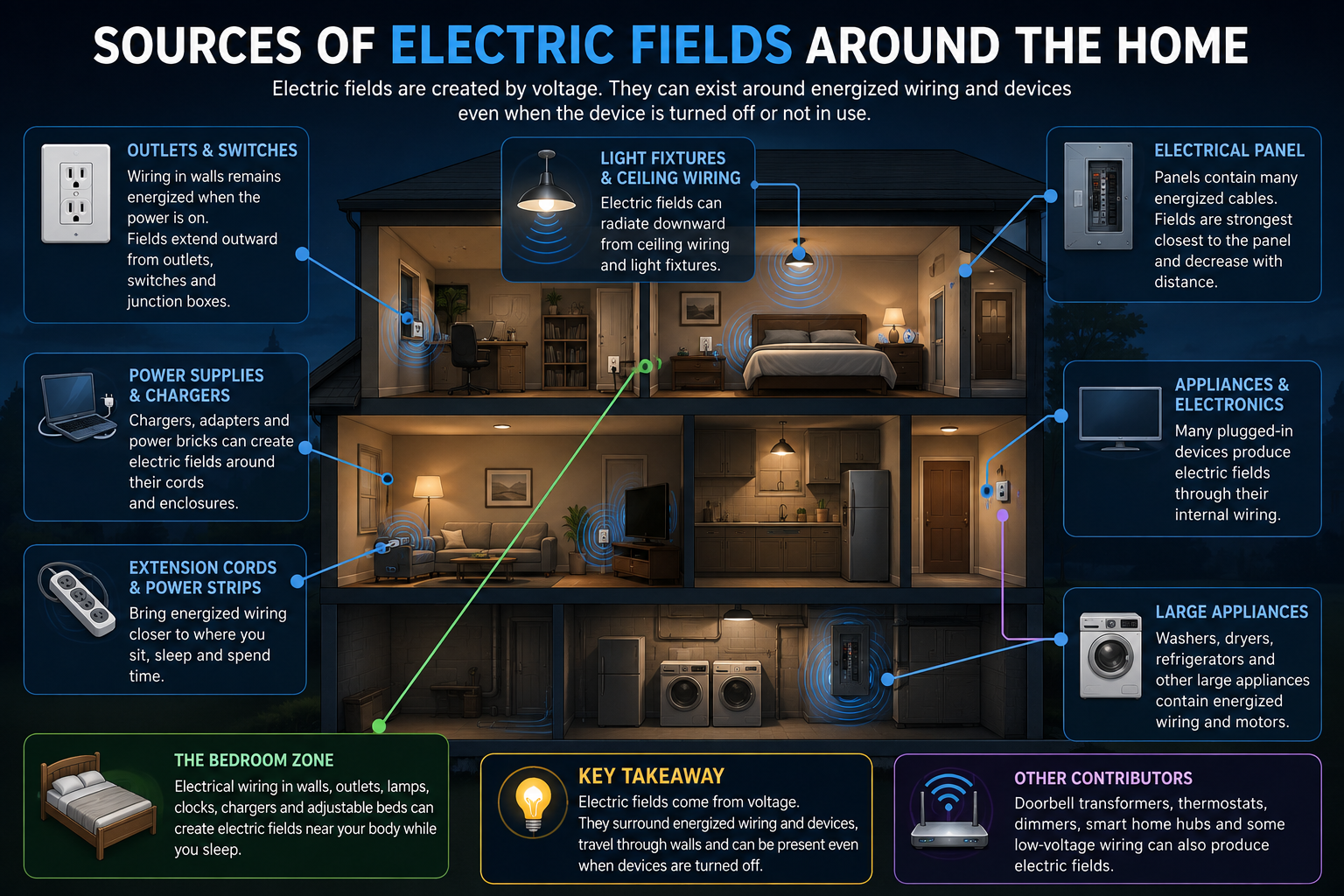
Electric fields are produced by electrical voltage. They can exist around energized wiring, cords, outlets and appliances whenever voltage is present, even when little or no current is flowing.
Voltage creates electric fields
Voltage represents electrical potential. When wiring or another conductive object is energized, an electric field can extend outward into the surrounding space.
Electric-field strength is commonly measured in volts per meter (V/m).
How Electric Fields Behave
Created by voltage
Energized wiring and electrical objects can produce electric fields in the space around them.
Change with distance
Moving farther away from a localized source will often reduce the measured electric field. The exact pattern depends on the source and surrounding environment.
Remove the voltage
De-energizing a circuit at the breaker can be a useful diagnostic test because it removes voltage from that circuit.
Common Sources in the Home
Wiring in Walls & Ceilings
Energized branch-circuit wiring runs throughout most homes. Electric fields may extend outward from wiring hidden behind finished surfaces.
Outlets & Switches
Electrical boxes and the wiring feeding them can remain energized even when nothing is plugged into the outlet.
Lamps & Light Fixtures
Lamp cords, fixtures and switches can have electric fields around them while connected to energized wiring.
Power Supplies & Chargers
Laptop adapters, chargers and power supplies contain energized conductors and components. Their cords may also contribute to the field around a workstation or bed.
Appliances
Refrigerators, washers, dryers, televisions, computers and other plugged-in equipment contain energized wiring.
Extension Cords & Power Strips
Extension cords and power strips can bring energized wiring close to beds, couches and desks without being particularly noticeable.
Electrical Panels
Electrical panels contain many energized conductors. Measurements depend on panel location, construction, wiring configuration and distance.
Bedside Equipment
Lamps, chargers, clocks, power strips, adjustable beds and wiring behind the wall are all potential sources worth investigating around sleeping areas.
Workstations
Desks can concentrate monitors, chargers, docks, lamps, cables and power strips in a relatively small area.
How to Find the Source
Establish a baseline reading where you normally sit, sleep or spend time.
Look for patterns. Does the reading increase near a wall, cord, outlet, appliance or piece of furniture?
Unplug one device, move one cord, switch something off or de-energize a circuit.
Did the reading change? Comparing before and after measurements can help identify the source.
Repeat the experiment to make sure the intervention consistently changes the field.
Ways to Reduce Electric Fields
- Increase distance from identified sources.
- Move cords and power strips away from beds, seating and other areas where you spend significant time.
- Unplug unnecessary equipment when practical.
- Use properly grounded equipment where grounding is part of the equipment's intended design.
- Investigate building wiring when measurements indicate it is an important source.
- Have electrical modifications performed by a qualified electrician.
Using an Electric-Field Meter
- Make sure the instrument actually measures electric fields.
- Confirm the units being displayed.
- Keep your body and meter position reasonably consistent when comparing measurements.
- Move slowly through the environment and watch for spatial patterns.
- Change one suspected source at a time.
- Compare the same location before and after the change.
- Record the location, distance and conditions along with the reading.
A Measurement Needs Context
A meter reading becomes much more useful when you know where it was taken, what was operating, how far you were from the suspected source, and what happened when you changed something.
| Location | Reading | Possible Source | Experiment | New Reading |
|---|---|---|---|---|
| Head of bed | _____ V/m | Wall wiring / lamp / cord | Disconnect source or test circuit | _____ V/m |
| Desk | _____ V/m | Monitor / charger / power strip | Move or disconnect suspected source | _____ V/m |
| Couch | _____ V/m | Outlet / wall wiring / nearby device | Measure at different distances | _____ V/m |